You require an Ann Arbor builder who knows Michigan's unique soil conditions and weather challenges-and develops foundations, drainage, and HVAC to Michigan Residential Code. We check zoning, setbacks, ROW, and utilities, then create detailed construction documentation. Count on tight envelopes (≤1.5 ACH50), efficient HVAC systems and renewable energy preparation, Class 4 roofing, and vapor‑open WRBs. We offer detailed estimates and quality assurance, and explicit protection plans. See how this approach prevents change‑order surprises and accelerates approvals.
Key Takeaways
- Proven Ann Arbor expertise: municipal regulations, including zoning, setbacks, tree preservation, and right-of-way rules to eliminate unexpected delays and budget adjustments.
- Site-specific knowledge: managing challenging soil conditions, water table issues, frost-line foundations, and Michigan code compliance for drainage and waterproofing
- Energy-forward builds: ≤1.5 ACH50 envelopes, high-efficiency cold-climate heat pumps, energy recovery ventilation systems, PV-ready roofs, and HERS-tested commissioning.
- Fully integrated design-build: delivering schematic to permit-ready documentation, including unified structural, MEP, and low-voltage systems, and comprehensive commissioning documentation.
- Rigorous quality assurance and project planning: standardized quality testing, key progress reviews, advanced materials acquisition planning, and clear weekly progress reports through final delivery.
Why Local Expertise Matters in Ann Arbor
Though design vision steers a custom home, local expertise ensures it gets built correctly in Ann Arbor's particular conditions. You'll navigate heavy clay soil, high groundwater conditions, and frost-depth requirements with a builder who comprehends site drainage, moisture barriers, and foundation moisture protection per Michigan Residential Code. Regional experts configure foundations, footings, and thermal barriers to withstand frost cycles and facilitate seasonal construction phasing that safeguards schedules and materials.
They'll coordinate structural layout, setbacks, and facade features with the neighborhood's character while managing approvals, tree preservation, and right-of-way regulations. You'll obtain accurate snow-load calculations, energy code adherence, and HVAC systems customized to moisture fluctuations. Procurement utilizes vetted contractors and inspectors, decreasing change orders. Infrastructure coordination, rainwater management, and erosion prevention are properly sequenced, ensuring your home performs efficiently, passes all inspections, and integrates with its surroundings.
The Process of Custom Home Design and Planning
Prior to breaking ground, you have to establish scope, budget, and program, then advance through preliminary designs to final construction plans. Starting with a thorough site evaluation to analyze site constraints, infrastructure, sun exposure, water management, soil conditions, and existing vegetation, verifying the footprint and elevations match actual site conditions. Through collaborative meetings, you determine target objectives-energy efficiency goals, durability standards, and accessibility criteria-and choose systems (heating/cooling, insulation, fenestration) to achieve them.
During schematic design, you work through multiple plan options and massing studies, as you verify structural feasibility and egress routes. During design development, you finalize architectural assemblies, select materials, coordinate structural, MEP, and low-voltage systems, and finalize fixture schedules. The final phase delivers comprehensive construction documents: fully dimensioned plans, sections, details, and specifications that are carefully aligned, constructible, and set for cost estimation and timeline planning.
Navigating Zoning Laws, Permits, and Property Selection
With a comprehensive set of aligned construction documents, you advance to the regulatory requirements: validating zoning requirements, obtaining permits, and choosing a appropriate lot that supports the program. Check the zoning designation, usage, setbacks, height restrictions, lot coverage, floor area ratio, and frontage. Assess overlays, floodplains, and tree preservation. Validate access, driveway spacing, and fire apparatus clearances. Order boundary and topographic surveys to determine utilities, wetlands, and utility easements. Complete soil testing and geotechnical borings to determine bearing capacity, groundwater, and foundation specifications.
Arrange a meeting with the City of Ann Arbor Planning and Building staff for preliminary consultation. Prepare required submittals: architectural plans, site drawings, drainage specifications, erosion control measures, and engineering documentation. Acquire necessary permits including building, stormwater, and right-of-way permissions. Coordinate site reviews and technical reviews, and record all approvals.
Eco-Friendly Building Practices and Energy Solutions
When considering aesthetics and program elements in your design, you must incorporate sustainability measures that satisfy or surpass Michigan Energy Code (MEC 2015/ASHRAE 90.1 as locally amended) and Ann Arbor's carbon-reduction objectives. Make it a priority to create a tight thermal envelope with blower-door requirements ≤1.5 ACH50, continuous exterior insulation, and thermally broken elements. Choose high-performance windows with U-factors ≤0.25 and SHGC adjusted for passive solar on south façades with properly sized overhangs.
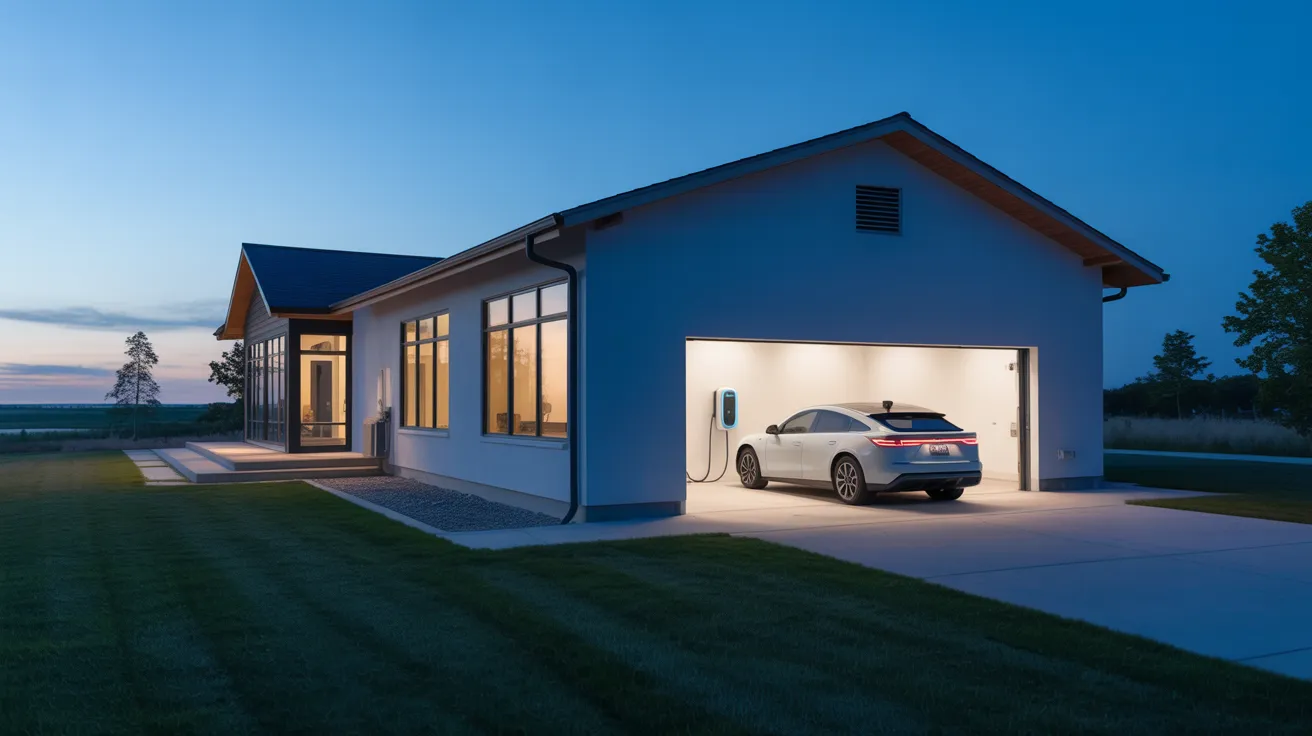
Start by properly sizing HVAC systems using ACCA Manual J/S/D, and proceed with implementing advanced cold-climate heat pumps, ERVs balanced to ASHRAE 62.2, and intelligent controls. First reduce loads by optimizing orientation, executing air sealing, and incorporating ductless distribution. Configure for net zero potential using all-electric systems, EV charging infrastructure, heat-pump water heaters, and a solar-ready roof at perfect tilt/azimuth. Confirm efficiency using professional commissioning and RESNET HERS certification.
Craftsmanship, Materials, and Build Quality
We select high-quality building materials certified for Michigan's extreme freeze-thaw cycles, compliant with IRC, IBC, and local Ann Arbor amendments. We deliver superior craftsmanship practices - tight tolerances, specified fastening schedules, moisture management details, and industry-standard assemblies. You receive thorough quality control with recorded inspections at pre-slab, framing, MEP rough-in, insulation, and final commissioning.
Premium, Durable Materials
Specify high-quality, long-lasting materials from the start to lock in efficiency, durability, and code compliance. You'll minimize lifecycle costs, meet Michigan Residential Code requirements, and minimize upkeep.
Begin by focusing on structural fundamentals from the start: utilize kiln-dried, graded lumber or LVLs for stable dimensions; choose corrosion-resistant fasteners (ASTM A153 or A653) for wet areas; and choose concrete with suitable air entrainment and a minimum 4,000 psi compressive strength for freeze-thaw durability. For exterior systems, select fiber-cement or Recycled composites for outer siding, Class 4 impact-rated roofing, and PVC/ABS where allowed by code, with solvent-welded joints.
To achieve high R-values and moisture control, integrate exterior continuous insulation and vapor-permeable weather barriers. Evaluate hemp concrete units for non-bearing wall sections to boost thermal mass and moisture regulation. Top off with Class A, low-VOC interior treatments and weather-resistant exterior components.
Superior Craftsmanship Criteria
While materials establish the foundation, workmanship determines safety, performance, and regulatory adherence in the field. You expect plumb, level, and square assemblies; we ensure precise measurements at structural framing, exterior sheathing, and finishing trim. Our teams employ expert craftsmanship where they create value-featuring exact trim installation-while maintaining installation requirements and the Michigan Residential Code. Fastener patterns, corrosion resistance, and substrate preparation adhere to established protocols to ensure structural integrity and guarantee eligibility.
You get neat penetrations, well-executed flashing, and precise reveals at entryways, windows, and built-in elements. Mechanical penetrations align with framing loads and fire-blocking. Materials satisfy established finishing requirements: mil specifications, adhesion quality, and uniform finish. Tile installations are even, grout joints consistent, and sealants finished for expansion, endurance, and weather protection.
Strict Quality Oversight
Because quality must be demonstrated, not presumed, we maintain a documented QA/QC program from procurement through closeout. You'll see submittal reviews, preconstruction meetings, and verified material sourcing with complete procurement documentation. We ensure code conformance against the Michigan Residential Code and manufacturer specifications before proceeding to fabrication.
Throughout construction, we conduct comprehensive site inspections encompassing essential phases: foundations, framing, MEP rough-in, air/water barriers, insulation, and finals. We utilize specialized tools such as moisture meters, torque verification, blower-door, duct-leakage, and IR thermography to validate performance specifications. All work adheres to ACI, APA, and AWI standards. If deficiencies occur, we implement quality control measures, including follow-up checks and sign-off. Quality of work is verified through comprehensive checklists monitoring fastener schedules, flashings, clearances, and finishes. Detailed information is prepared in a closeout package containing warranties, test reports, and as-builts.
Smart Technology Integration and Modern Features
Starting with prewiring and extending to commissioning, smart home integration begins with a code-compliant framework that aligns equipment, energy distribution, and connectivity with your daily routines while meeting Michigan regulations. We design cable routing for security cameras, entry systems, and environmental monitors, separate electrical circuits for reliable operation, and install NEC-compliant surge protection. You'll get integrated smart controllers that enable voice commands and intelligent automation, with robust cable networks and encrypted wireless network access.
We configure lighting environment configurations with adaptive lighting controls, tie ventilation to air quality measurements, and implement hydronic or forced-air controls for tight temperature bands. Wiring architecture delivers 10 GbE, while intelligent lighting and shade controls align with load calculations. Testing ensures system redundancy, software updates, security protocols, and network documentation.
Upfront Pricing, Estimates, and Delivery Timeframes
You should insist on comprehensive, categorized estimates that separate all costs including labor, materials, permits, and associated fees, so cost exposure is traceable. Require a feasible project plan with milestones tied to building code phases (foundation, rough-in MEP, insulation, drywall, final), each with clear deadlines and buffer periods. Verify that modification procedures detail pricing structure, approval workflow, and scheduling implications before work proceeds.
Clear, Itemized Bids
Begin with a detailed bid that divides every scope into measurable components-such as demolition, foundation, framing, MEP rough-ins, insulation, finishes-every item tied to labor, materials, unit costs, allowances, and contingencies. You'll observe quantities, specs, and code references where relevant, allowing you to validate compliance and scope. Request line item estimates that cite drawings, details, and product data (e.g., R-values, PSI, fire ratings, and fixture schedules). Require unit pricing for ground works, cubic yards of concrete, linear feet of footing drain, square footage of drywall, and unit-based MEP costs.
Track every allowance with brand specifications, model information, and installation parameters. Include contingency provisions as separate, percentage-driven items linked to established risk types and change-management procedures. Request exclusions and alternates in documented form to avoid scope creep and protect your cost allocation.
Project Timeline and Milestones
Although bids establish expenses, proper scheduling keeps your build moving forward-schedule milestones based on inspections, permits, critical-path tasks, and lead times. You'll map out site work, foundations, framing, utility rough-ins, insulation, drywall, finishing, and commissioning as measurable construction milestones with clear start and finish windows. Plan utility work and surveys ahead to avoid corrections. Set firm procurement deadlines for materials with extended delivery times-panels, windows, trusses, and fixtures-so deliveries occur before installation by at least one inspection cycle.
Develop a baseline schedule including contingencies for environmental factors and inspection reviews. Establish acceptance requirements: passed footing inspection, passed rough-in, blower-door test results, and final occupancy approval. Sustain weekly client communication with forward-looking plans and deviation records. Coordinate trade availability with inspection schedules. Organize handover coordination: punch list completion, warranty paperwork, operation and maintenance guides, and final clean.
Collaboration: Architects, Designers, and Trade Partners
The effectiveness of a custom home project relies on proper handoffs, requiring well-documented teamwork among architects, interior designers, structural and mechanical engineers, and trade partners, following code requirements from day one. The focus remains on architectural alignment using BIM-enabled drawing reviews, clash detection, and detailed submissions conforming to Michigan Residential Code, NEC, and energy code specifications. Detailed scopes are issued specifying key parameters like tolerances, fastening schedules, vapor control layers, firestopping, and egress specifications.
Via structured Trade collaborations, you facilitate pull-planning meetings, determine sequencing (including foundation, framing, MEP roughs, insulation, drywall), and distribute look-ahead schedules. You request RFIs, shop drawings, and product data with listing/labeling verification. Field QA/QC includes pre-close, insulation, rough, and pre-pour inspections, plus testing documentation: blower door, duct leakage, and equipment startup checklists. Decision tracking is maintained with version control.
Construction Aftercare and Warranty Services
With handoffs executed and code inspections closed, support continues through a comprehensive warranty program that's as disciplined as construction. You'll be provided with a comprehensive warranty matrix specifying coverage periods for structure, building envelope, systems, and finishes, conforming to Michigan code and manufacturer requirements. We register products, track serials, and log maintenance milestones to align with Service Protocols and maintain manufacturer warranties.
You can submit tickets via the portal or through a phone call; we prioritize by life safety, leak issues, and comfort concerns. Our specialists carry out root-cause diagnostics before fixes, documenting materials, images, and solutions. Seasonal tune-ups ensure HVAC static pressure, safety of combustion, GFCI/AFCI performance, and drainage grading. We manage Warranty Transfers during the sale, updating documentation, licenses, and lien releases, ensuring continuity, clear SLAs, and measurable closeouts.
Questions Frequently Asked
How Do You Address Conflict Resolution Between Homeowners and the Build Team?
You tackle conflict resolution by creating a written issue log, organizing quick stand-ups, and utilizing documented change orders. You resolve disagreements with transparent cost/schedule impacts and consulting specs, drawings, and code sections. You outline expectations at kickoff: authority for decisions, RFI turnaround, and tolerance standards. You check facts on-site, suggesting compliant alternatives, and memorializing agreements via meeting minutes. You escalate per a pre-set ladder, then finish with punch-list validation and client sign-off.
What Insurance Coverage Do You Carry and Require From Subcontractors?
Just like an expertly calibrated safeguard, you maintain General Liability and Builder’s Risk to safeguard the project’s spine and skin. You also copyright workers’ compensation and commercial auto. You require subcontractors to submit matching General Liability (min. $1M/$2M), workers’ comp, and auto, designating you as additional insured with primary, noncontributory wording and waiver of subrogation. You confirm COIs before mobilization, track expirations, and enforce contract indemnity, ensuring law-abiding, risk-managed site operations.
Are you able to provide recent client references and opportunities for site visits?
Yes. You’ll get current client references with complete contact details and project scopes. We’ll schedule site tours of current builds, organized to meet OSHA safety requirements and access protocols. You’ll observe framing, MEP rough-ins, envelope details, and finish quality. We’ll provide punch lists, schedule dashboards, and QA/QC checklists to ensure processes. You can review documented client testimonials, warranty records, and change-order logs to evaluate communication, cost control, timeline adherence, and code compliance.
How Can You Ensure the Site and Neighbors Are Protected During Construction?
One defend the site and neighbors by erecting perimeter site fencing, displaying OSHA signage, and ensuring secure access. One execute dust control with mist spraying, covered stockpiles, and wheel-wash stations. One manage noise by timing high-decibel tasks within ordinance windows and using baffled equipment. We stop runoff with silt fence, inlet protection, and stabilized construction entrances per EPA SWPPP. One stage deliveries to avoid road blockage and maintain streets swept and lighting shielded.
What is your change-order process and approval turnaround time?
Measure twice, cut once. You send a change request with budget implications, specifications, and scope. We perform change management by: verifying code compliance, quantifying schedule and cost, updating drawings, click here and obtaining signatures. The usual approval timeframe: Between 24 and 72 hours for minor changes, and 5 to 7 business days for structural, MEP, or permitting requests. Upon your e-signature of the change order, we provide a revised schedule of values and CPM update, then implement with tracked revisions and field verification.
Conclusion
You’re prepared to choose an Ann Arbor custom home builder who speaks the local code as a primary language. You’ll navigate zoning with ease, maintain budgets in check, and make timelines stay on track. You’ll emphasize high‑efficiency envelopes, right‑sized mechanicals, and subtle materials that don’t demand attention. You’ll require clean documentation, transparent bids, and proven assemblies. When minor surprises arise, you’ll call them adjustments. With the best partners, you’ll build a home that operates, adheres to regulations, and stands the test of time without drama.
Comments on “Ann Arbor Home Design Professionals”